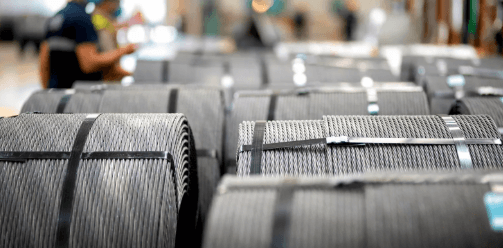
In industrial packaging, the reliability of your strapping supplier directly affects the security of every shipment you send. steel strapping supplier. A dependable steel strapping supplier provides consistent product quality, reliable inventory, competitive pricing, and the technical support to help you optimize your strapping system. This guide outlines what to look for when evaluating and selecting a steel strapping supplier for your business.
What Distinguishes a Quality Steel Strapping Supplier?
The best steel strapping suppliers combine deep product knowledge with consistent quality control, reliable inventory management, and genuine commitment to customer support. They understand that packaging failures have real cost consequences and work proactively to prevent them.
Product Range and Availability
A comprehensive supplier stocks multiple widths, thicknesses, grades, and surface finishes of steel strapping, along with compatible seals, buckles, and application tools. Single-source supply simplifies procurement and ensures compatibility across your strapping system.
Quality Consistency
Quality steel strapping must meet tight tolerances for width, thickness, and tensile strength. Request mill certifications or test reports that verify each production lot meets specifications. Suppliers who source from certified mills deliver more consistent quality than those who simply repackage uncertified product.
- ISO 9001 certified manufacturing source
- Mill certification available for each lot
- Consistent tensile strength and dimensional tolerances
- Inventory depth to support urgent orders
- Flexible delivery terms including just-in-time supply
Evaluating Service and Support
Beyond product quality, evaluate a supplier’s service capabilities. Can they respond quickly to urgent orders? Do they provide technical support for troubleshooting strapping equipment or optimizing strap specifications? Is their order processing and delivery reliable?
Technical Consulting Services
Quality suppliers offer application reviews to help customers optimize strapping specifications, reduce consumption without compromising security, and identify opportunities to reduce total strapping system costs through equipment upgrades or procedure changes.
Building a Long-Term Supply Relationship
The most productive supplier relationships are built on transparency, mutual trust, and shared commitment to performance. Share your production forecasts to help suppliers maintain adequate inventory. Provide feedback on product quality and service. Negotiate terms that recognize your loyalty and volume.
See also: What Is Blockchain Technology
Frequently Asked Questions
How do I verify a steel strapping supplier’s quality claims?
Request mill certifications and independent test reports for all strapping grades. If ordering significant volumes, consider having an independent lab verify tensile strength and dimensional specifications on incoming material.
What lead times should I expect from a steel strapping supplier?
Standard grades from stock-carrying suppliers typically ship within one to three business days. Custom dimensions, special coatings, or high-volume orders may require one to four weeks depending on the supplier’s production schedule.
Can I purchase strapping tools and equipment from the same supplier?
Many strapping suppliers offer a complete range of manual, pneumatic, and battery-powered strapping tools, as well as semi-automatic and fully automatic strapping machines. Buying tools and strapping from the same supplier ensures compatibility and simplifies troubleshooting.
Conclusion
Finding the right steel strapping supplier is about more than price per coil. It’s about building a reliable supply relationship that supports your packaging operation day after day. Focus on suppliers who demonstrate consistent quality, maintain adequate inventory, provide genuine technical support, and stand behind their products. A supplier who understands your business and helps you optimize your strapping system delivers value far beyond the product itself.