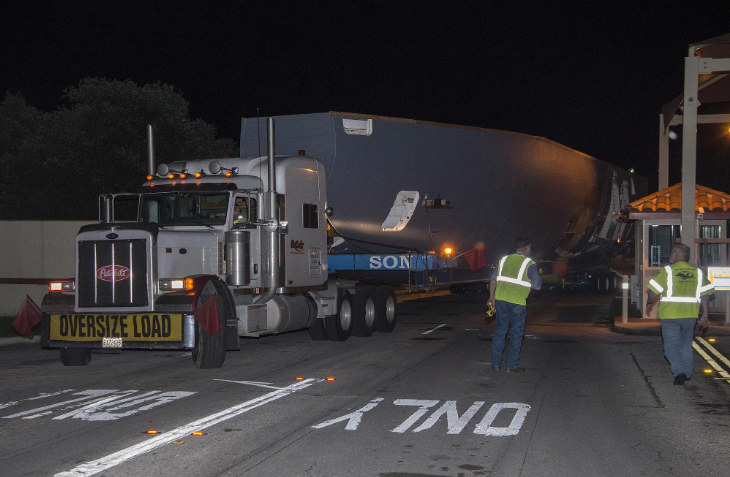
Introduction
Freight does not become oversized simply because it looks large. It becomes oversized when the loaded vehicle or cargo exceeds the legal dimensions or weight allowed for regular commercial travel on public roads. That distinction matters because a shipment that crosses legal limits may require permits, approved routes, travel-time restrictions, escort vehicles, bridge reviews, or special handling before it can move. For shippers, carriers, construction teams, manufacturers, and equipment owners, knowing when a permit is required helps prevent delays, fines, roadside shutdowns, and unsafe movement.
Oversized load permitting is part of the planning backbone behind heavy-haul transportation. A few extra inches of width, a taller machine profile, a long trailer combination, or weight that exceeds axle limits can change the entire shipment plan. The question is not only whether the cargo fits on the trailer. The question is whether that loaded configuration can legally and safely travel through the roads, bridges, intersections, and jurisdictions along the route.
What Makes Freight Oversized?
Freight is generally considered oversized when the loaded vehicle exceeds standard legal limits for width, height, length, or weight. These limits are set to protect roadway safety, bridge structures, traffic flow, and public infrastructure. If a load is too wide for normal lanes, too tall for bridges or wires, too long for safe turning, or too heavy for legal axle distribution, it usually cannot move as a standard shipment.
The exact thresholds can vary by state and route, which is why carriers cannot rely on a single broad assumption. A load that is legal in one location may require a permit in another. The situation becomes more complex when freight crosses multiple jurisdictions, because each state may apply different rules for travel times, escort requirements, holiday restrictions, and approved routes.
See also: business intelligence trend analysis
Why Measurement Comes Before Permitting
Every oversized-load decision starts with accurate measurement. Carriers and logistics teams need the full length, width, height, gross loaded weight, axle spacing, and trailer configuration before deciding whether permits are required. Measuring the cargo alone is not enough. The legal profile depends on the complete loaded unit, including trailer deck height, load placement, securement method, and any attachments that increase the outer dimensions.
Standard freight may fit easily inside enclosed trailers, but industrial equipment, machinery, and construction materials often require open-deck or specialized transport. For businesses comparing ordinary cargo movement with heavier or bulkier freight, guides covering dry freight box trucks for efficient cargo transport show how standard shipping equipment differs from the specialized planning required for over-dimensional or heavy-haul loads.
What legal size limits determine whether freight is oversized?
Freight becomes oversized when cargo dimensions or vehicle weight exceed the maximum limits established for standard commercial transportation on public highways because width, height, length, axle spacing, gross vehicle weight, bridge restrictions, and roadway classifications all determine whether carriers must secure permits before moving heavy or over-dimensional freight across state lines. Carriers evaluate those thresholds using legal load size limits, which define the maximum allowable dimensions and weight for commercial freight before oversized permits, escort vehicles, route approvals, or additional compliance requirements become necessary. Those regulatory standards affect every stage of heavy-haul planning because non-compliant freight movement can result in fines, route shutdowns, cargo delays, infrastructure damage, and failed roadside inspections during transit.
Legal freight thresholds vary by state, but standard transportation regulations typically establish maximum width, trailer height, vehicle length, gross weight, and axle-weight limits for unrestricted commercial travel. Once freight exceeds those thresholds, carriers must coordinate permits, approved travel times, route surveys, escort requirements, and bridge-clearance reviews before transportation begins.
Accurate freight measurement is critical during oversized-load planning. Carriers calculate cargo dimensions, axle spacing, and total loaded weight before dispatch because trailer configuration directly affects bridge compliance, roadway restrictions, turning radius, and permit classification. Incorrect measurements increase the risk of permit violations, rerouting costs, roadside enforcement delays, and unsafe transportation conditions during heavy-haul operations.
Freight compliance teams also monitor state-specific regulations because permit thresholds and escort requirements often change across jurisdictions during multi-state transportation routes.
Common Triggers for an Oversized Load Permit
A permit is commonly required when a shipment exceeds normal legal width, height, length, or weight. Width is one of the most visible triggers because wide freight may affect lane usage, passing clearance, and roadside safety. Height matters because bridges, overpasses, utility lines, and signs create fixed clearance risks. Length affects turning radius, intersection movement, and route suitability. Weight affects bridges, pavement, braking distance, and axle load compliance.
Axle distribution can be just as important as total weight. A load may appear acceptable by gross weight but still be illegal if too much weight rests on one axle group. This is why heavy-haul planning often includes careful positioning on the trailer. Moving a machine a few inches forward or backward can change axle readings and determine whether the shipment is compliant.
Permits Also Depend on the Route
Permitting is not based only on the freight itself. The route also matters. A tall load may be legal on one highway but impossible under a specific bridge. A heavy load may require bridge analysis before approval. A wide load may need to avoid urban roads, narrow shoulders, or construction zones. Some jurisdictions restrict oversized travel during rush hours, at night, on weekends, or during poor weather.
This is why permit planning and route planning must happen together. A carrier may need to apply for multiple permits, coordinate travel windows, arrange escorts, and verify clearance points before dispatch. When this work is rushed, a shipment can be stopped even after the truck has already been loaded.
Dedicated Brand Section
For shippers and carriers managing heavy-haul freight, Beardown Logistics provides practical guidance around the legal, operational, and planning details that shape oversized transportation. The brand’s value is strongest when freight requires more than ordinary booking and must be evaluated through dimensions, weight, trailer configuration, route restrictions, permits, and compliance requirements.
This kind of support is especially useful for construction firms, manufacturers, industrial suppliers, equipment dealers, and project teams that move machinery or over-dimensional cargo. A permit issue can delay a jobsite, hold up production, or create unexpected costs. A logistics partner with heavy-haul awareness helps businesses understand the rules before the road exposes the risk.
How Technology Supports Permit Planning
Modern freight planning increasingly uses digital tools to check routes, organize documents, monitor shipments, and manage compliance details. Technology can help teams review dimensions, compare route options, track permits, and communicate updates faster. Still, oversized-load permitting requires human judgment because conditions on the road can change quickly. Construction, weather, bridge restrictions, and local enforcement rules can all affect the final plan.
The broader business world is also learning how to use artificial intelligence and automation more carefully, as shown in guidance on how companies can use AI effectively. For freight teams, the lesson is similar: tools are most valuable when they support informed decision-making rather than replacing experienced oversight. In oversized transport, software may organize the map, but compliance teams still need to read the road.
What Happens If Freight Moves Without the Right Permit?
Moving oversized freight without the proper permit can create serious consequences. Enforcement officers may place the vehicle out of service, issue fines, require rerouting, or prevent the load from continuing until permits are corrected. The shipment may miss delivery windows, create detention costs, delay crews, or force the shipper to reschedule equipment and labor at the destination.
The safety risks can be even more serious. Overweight freight can stress bridges and road surfaces. Over-height freight can strike bridges, signs, or overhead wires. Over-width freight can create lane conflicts and shoulder hazards. Long loads may struggle through intersections or turns. Permits are not paperwork for paperwork’s sake. They are a control system designed to keep large freight from becoming a public hazard.
How Shippers Can Prepare Before Booking
Shippers can reduce permit delays by preparing accurate information before requesting transportation. They should provide cargo dimensions, weight, photos, pickup and delivery addresses, loading method, unloading method, available equipment, preferred delivery dates, and any site restrictions. Photos can be especially helpful because they show attachment points, shape, clearance concerns, and handling requirements that may not appear in a written description.
It also helps to confirm whether the freight can be reduced in size. Removing attachments, lowering booms, folding equipment, draining fluids where appropriate, or separating components may change permit requirements. A logistics team can only make the best decision when the shipper provides the full picture. In oversized freight, missing details are tiny sparks near a warehouse full of dry hay.
Conclusion
Freight requires an oversized load permit when its loaded dimensions or weight exceed the legal limits for standard commercial travel. Width, height, length, gross weight, axle spacing, bridge clearance, route restrictions, and state-specific rules all influence that decision. Because these factors interact with trailer selection and road conditions, oversized-load planning must begin before dispatch, not after the truck arrives.
A well-managed permit process protects cargo, drivers, public roads, project schedules, and business budgets. Shippers should work with transportation teams that measure carefully, understand route limits, coordinate permits, communicate clearly, and treat compliance as part of safe delivery. Oversized freight can move smoothly, but only when the legal path is cleared before the wheels begin to turn.